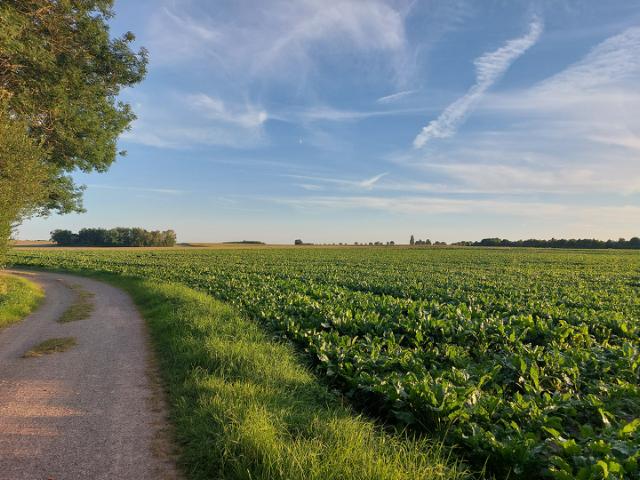
Cultivation and Production
Sugar beets are used efficiently: the water in the beets is recycled during sugar extraction, and the leftovers are used as animal feed or for biogas.
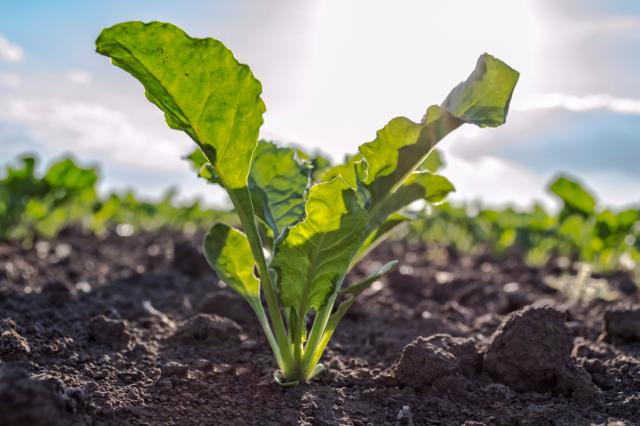
Nutrition from the soil, energy from the sun
Sugar beet develops a deep root system that can extend up to two metres into the soil. The plant absorbs water and nutrients from the soil as it grows. The leaves use sunlight to support the plant's growth and the production of sugar.
Sugar beet is typically grown as part of a crop rotation system. In many growing regions, the crop remains in the field after some other crops have been harvested in the autumn. Crop rotation involves growing different crops on the same field over time as part of normal agricultural practice.
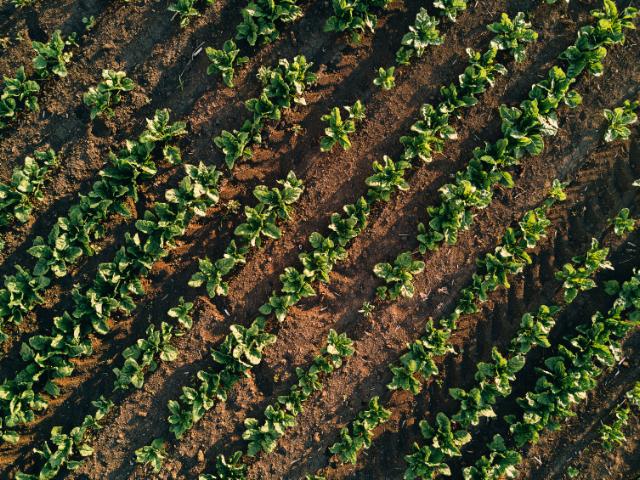
Sugar beet is more than just sugar
A sugar beet contains approximately 16% sugar and, like many other crops, has a high water content of around 75%. Water is used at several stages of the sugar production process. Part of this water originates naturally from the sugar beet itself and can be reused within the production process. Depending on operational and process conditions, this can contribute significantly to meeting the demand for process water.
After the sugar has been extracted from the sugar beet, a fibre-rich beet pulp remains. Following drying and pressing, it is used in various types of animal feed. Molasses is the thick syrup that remains during the final stage of production when pure sugar crystals are formed. Molasses is used as a palatable and energy-rich feed ingredient for, among others, cattle and horses.
You can learn more about Nordzucker’s overall sustainability efforts in the areas of climate, environment, and social responsibility at Nordzucker Together Sustainable. The information provided on this website describes the Group’s general objectives and activities and does not constitute an environmental assessment of any individual product.